
Holy Souls Primary School

If there is anything you would like to see featured on our BLOG, please send us a message!
Friday, 24 February 2012

Thursday, 23 February 2012
Literacy
 This week in literacy we will be continuing our work on Valiant.
How did Valiant feel when he flew off to join the Royal Pigeon Service?
Maths
This week in numeracy we will be moving on to data handling. Don’t forget to keep going with your time targets!
http://www.echalk.co.uk/Maths/vennDiagram/venn.html
http://www.amblesideprimary.com/ambleweb/mentalmaths/grapher.html
http://www.primaryresources.co.uk/online/venn.swf
http://www.echalk.co.uk/Maths/vennDiagram/venn.html
http://www.amblesideprimary.com/ambleweb/mentalmaths/grapher.html
http://www.primaryresources.co.uk/online/venn.swf
Our Roman Battle!!!

This week in History we had our own Roman Battle!!
We will had a look at this link.
We talked about this diagram.
Tuesday, 21 February 2012


Making 2D shapes


This is what Miss Cranmer's group worked on in Monday's lesson. It was tricky to make these 2D shapes!
Sunday, 19 February 2012
This Tuesday is Shrove Tuesday

In the UK, Shrove Tuesday is also known as Pancake Day (or Pancake Tuesday to some people) because it is the one day of the year when almost everyone eats a pancake.
What is Pancake Day?
Pancake Day ( also known as Shrove Tuesday) is the last day before the period which Christians call Lent. It is traditional on this day to eat pancakes.
Why are Pancakes eaten on Shrove Tuesday?
Lent is a time of abstinence, of giving things up. So Shrove Tuesday is the last chance to indulge yourself, and to use up the foods that aren't allowed in Lent. Pancakes are eaten on this day because they contain fat, butter and eggs which were forbidden during Lent.
When is Shrove Tuesday (Pancake Day)?
Shrove Tuesday is celebrated the day before Ash Wednesday and is therefore the final day before the commencement of Lent, a Christian festival leading up to Easter Sunday (Easter Day).
Shrove Tuesday always falls 47 days before Easter Sunday.
Why do Christians call the day 'Shrove Tuesday'?
The name Shrove comes from the old word "shrive" which means to confess. On Shrove Tuesday, in the Middle Ages, people used to confess their sins so that they were forgiven before the season of Lent began.
What is Shrove Tuesday?
Shrove Tuesday is a day of celebration as well as penitence, because it's the last day before Lent. Throughout the United Kingdom, and in other countries too, people indulge themselves on foods that traditionally aren't allowed during Lent. Pancakes are eaten on this day because they contain fat, butter and eggs which were forbidden during Lent.
This Wedneday is Ash Wednesday

What is Ash Wednesday?
Ash Wednesday is a Christian festival. It marks the beginning of six and a half weeks of repentance, fasting and abstinence in preparation for the most important Christian festival of Easter.
When is Ash Wednesday?
Why is it called Ash Wednesday?
Ashes are something that are left when something is burned.
For Christians, ashes are a symbol of being sorry for things they have done wrong and want to get rid of forever. It is also a reminder to them that we all come from ashes, and to ashes we all will return.
Why are ashes marked on the forehead?
For Christians, the marking on the forehead with ash marks the commitment to Jesus Christ and God. They wanted to show God that they were sorry for the wrong things they had done in the past year.
What happens on Ash Wednesday today?
Many Christians will attend a religious service where the ashes are blessed and placed on their forehead.
Christians believe this marks the physical and spiritual beginning of a personal Lent season in which 40 days of repentance will begin leading up to the celebration of Easter Sunday.
The actual moment when the forehead is marked initiates the beginning of lent for each individual person.
What are the ashes made from?
In churches the priest first burns the palm that have been kept from last year's Palm Sunday and then mixes the ashes of these crosses with holy water (which has been blessed) to make a greyish paste. When people go to church on Ash Wednesday, the priest dips his thumb in the paste and uses it to make the sign of the cross on each person's forehead. Why are last years Palm Crosses recycled?
Palm Sunday celebrates Jesus's triumphant entry into Jerusalem, so when the crosses used in the last years Palm Sunday service are converted to ashes, worshippers are reminded that defeat and crucifixion swiftly followed triumph.
What do the ashes symbolise?
Using ashes to mark the cross on the believer's forehead symbolises that through Christ's death and resurrection, all Christians can be free from sin.
Wednesday, 15 February 2012
Coming up in Literacy
We will be using these video clips as we continue our Visual Literacy work on Valiant.
Our Targets for next Half Term


This half term our reading targets will be:
MUST – I can find language that an author has used to make an effect.
SHOULD – I can find and talk about the language an author has used to make an effect.
COULD – I can talk about the effect words have on the reader.
This half term our writing targets will be:
MUST – I can choose interesting words from a word bank.
SHOULD – I can use lots of adjectives and verbs to add detail
COULD – I can add detail to give information about something I write about.
This half term in maths our targets will be about time:
MUST – use vocabulary related to time and be able to read the time to the nearest quarter of an hour.
SHOULD – use vocabulary related to time and be able to read the time to the nearest minute on a 12 hour digital clock and to the nearest five minutes on an analogue clock.
COULD - use vocabulary related to time and be able to read the time to the nearest minute on a 12 hour digital clock using am and pm and read the time to the nearest minute using am and pm on an analogue clock.
We will post lots of links to help but these are a nice start. Have a go!
http://nwlg.org/pages/resources/ma_num/swf/12-24Game.htmlhttp://www.oswego.org/ocsd-web/games/StopTheClock/sthec1.htmlhttp://www.oswego.org/ocsd-web/games/stoptheclock/sthec2.html
MUST – use vocabulary related to time and be able to read the time to the nearest quarter of an hour.
SHOULD – use vocabulary related to time and be able to read the time to the nearest minute on a 12 hour digital clock and to the nearest five minutes on an analogue clock.
COULD - use vocabulary related to time and be able to read the time to the nearest minute on a 12 hour digital clock using am and pm and read the time to the nearest minute using am and pm on an analogue clock.
We will post lots of links to help but these are a nice start. Have a go!
http://nwlg.org/pages/resources/ma_num/swf/12-24Game.htmlhttp://www.oswego.org/ocsd-web/games/StopTheClock/sthec1.htmlhttp://www.oswego.org/ocsd-web/games/stoptheclock/sthec2.html
Friday, 10 February 2012
Happy Half Term

Have a Happy Half Term holiday everyone! Have a good break. Remember to do your reading, homeworks and learn your spellings for our sponsored spell. Try and find family members / friends to sponsor you too. Well done for all your hard work over the last half term!
Tuesday, 7 February 2012
Today we investigated which stand would be the most stable for our photoframe


 Have a look - which design would you pick and why?
Monday, 6 February 2012
Some fun puzzles for this chilly weather!
 Make your own snowman!
http://www.kenttrustweb.org.uk/kentict/content/games/snowman_v4.html
Have a go at these snow flake puzzles!
http://www.metoffice.gov.uk/education/kids/popup/popup_fun_and_games_snowflake.html
Well done Year 3!

Despite the snowy conditions, Year 3 had a wonderful trip to the primary proms concert at the Symphony Hall today. Well done children and thank you to all the grown ups who helped us!
Thursday, 2 February 2012
Maths links
Here is a fun way to remember 3d shapes. Can you tell me the names of any others?
Look at these links to test your logic and thinking skills!
Can you do the inverse?
http://www.hellam.net/maths2000/thinkno2.html
Can you use your logic skills?
http://www.kidspsych.org/farm.html
Look at these links to test your logic and thinking skills!
Can you do the inverse?
http://www.hellam.net/maths2000/thinkno2.html
Can you use your logic skills?
http://www.kidspsych.org/farm.html
Next RE lesson
We will be using this video in our lesson on Friday.
Here is an example of a Gospel Story.
In our last RE lesson we looked at different types of Gospel story. Can you tell me what type of story this is?
Here is an example of a Gospel Story.
In our last RE lesson we looked at different types of Gospel story. Can you tell me what type of story this is?
Tuesday, 31 January 2012
Pizza problem (yummy!!)
Miss Cranmer's maths group will look at the second problem in this video during our maths lesson tomorrow.
http://www.tes.co.uk/teaching-resource/Fractions-Decimals-and-Percentages-6047866/
Saturday, 28 January 2012
A sneaky peek

Year 3 are going to see the Primary Proms next Monday (6th Feb) at the Symphony Hall. This picture, link and video shows you where we are going and what the music might be like. The video shows lots of music halls around the country but the Birmingham Symphony Hall is in there. See if you can spot it from the picture in this post.
http://www.mfy.org.uk/inspiration/primaryproms
Thursday, 26 January 2012
Don't Forget...

to bring in photo frames to look at in DT next Tuesday!

to bring in information books for us to look at in our literacy lessons
Next week in maths

We will be looking at fractions. This link will help you think about them.
http://mathplayground.com/Fraction_bars.html
http://mathplayground.com/Fraction_bars.html
Our next RE lesson!
We will be looking at how we greet the gospel. We will use this video in our lesson.
Saturday, 21 January 2012
Maths Workshop

PLEASE DO NOT FORGET!
It is Year 3's Maths Inspire Workshop on Thursday morning. We look forward to seeing you all there.
Thursday, 19 January 2012
RE next week
This week in RE we will be looking at the liturgy of the word. Where do the first and second readings come from?
We will be using this video and this bible extract to help us! The video is of a story you know well!
This is an example of a Second Reading:
Paul, called to be an apostle of Jesus Christ through the will of God, and Sosthenes our brother,
To the church of God which is at Corinth, to those who are sanctified in Christ Jesus, called to be saints, with all who in every place call on the name of Jesus Christ our Lord, both theirs and ours:
Grace to you and peace from God our Father and the Lord Jesus Christ. (1 Corinthians 1:1-3, New King James Version)
We will be using this video and this bible extract to help us! The video is of a story you know well!
This is an example of a Second Reading:
Paul, called to be an apostle of Jesus Christ through the will of God, and Sosthenes our brother,
To the church of God which is at Corinth, to those who are sanctified in Christ Jesus, called to be saints, with all who in every place call on the name of Jesus Christ our Lord, both theirs and ours:
Grace to you and peace from God our Father and the Lord Jesus Christ. (1 Corinthians 1:1-3, New King James Version)
Finding out about Roman life
The Roman Baths in Bath. We have been talking about these in our topic work!
A quick tour of a house
A quick tour of a house
Next week in Literacy

We will be using facts from these links in our literacy work this week.
This shows parts of a plant and what plants need to grow
http://www.bgfl.org/bgfl/custom/resources_ftp/client_ftp/ks2/science/s_plants/index.htm
This re-tells key info about plant parts
http://www.naturegrid.org.uk/plant/index.html
This site shows what cress plants need to grow
http://www.ngfl-cymru.org.uk/vtc/factors_plant_growth/eng/Introduction/MainSessionPart2.htm
This site has lots of extra info about different kinds of plants.
http://www.catie.org.uk/plants_galore_page.html
This shows parts of a plant and what plants need to grow
http://www.bgfl.org/bgfl/custom/resources_ftp/client_ftp/ks2/science/s_plants/index.htm
This re-tells key info about plant parts
http://www.naturegrid.org.uk/plant/index.html
This site shows what cress plants need to grow
http://www.ngfl-cymru.org.uk/vtc/factors_plant_growth/eng/Introduction/MainSessionPart2.htm
This site has lots of extra info about different kinds of plants.
http://www.catie.org.uk/plants_galore_page.html
Wednesday, 18 January 2012
Look at our portraits portraying relationships.


We have learnt how to use different watercolour techniques.


Sunday, 15 January 2012
Well done!

Well done Year 6 for a fantastic Enrolment Mass. You all made your promise beautifully. Well done also to all the readers and those in the choir. Year 3 - it was wonderful to see so many of you there!
Friday, 13 January 2012

Have you seen our new displays in the Hall?


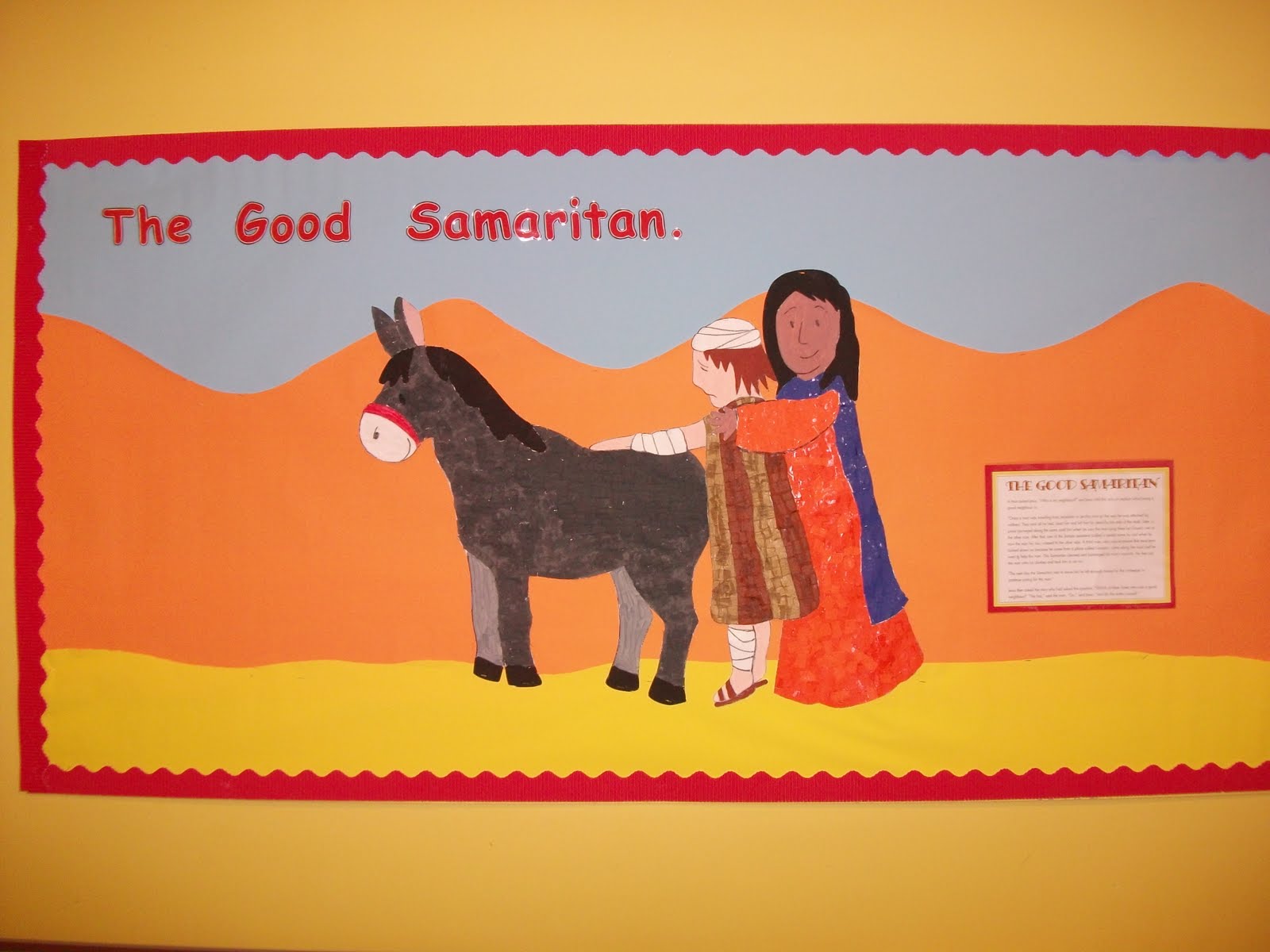
All our displays share stories from the bible. Some are parables and some are miracles. Do you know the stories?
Thursday, 12 January 2012
Don't Forget

Don't forget Year 6's Enrolment Mass on Sunday at 10:00am in Church. If you can come and sing in the choir, or just come with your family, it would be lovely to see you.
Green plants are amazing!!
This short video shows how amazing green plants are! We will be finding out all about them over the next few weeks in Literacy and write our own information book.
Writing Instructions for the perfect cup of tea!

Have a go at making tea for my Gran. Put the pictures in the correct order and then write the instructions underneath. Don't forget those bossy (imperative) verbs and time connectives.
http://www.crickweb.co.uk/assets/resources/flash.php?&file=teaseq
Tuesday, 10 January 2012


Friday, 6 January 2012
Coordinates game
This is the game we played in our maths lesson yesterday, as requested by Adam! :-)
http://resources.oswego.org/games/BillyBug/bugcoord.html
http://resources.oswego.org/games/BillyBug/bugcoord.html
Thursday, 5 January 2012
Pantomime

On Monday, the Bitesize theatre company will be visiting school and performing Snow White. Do you already know the story?
Next lesson in RE

This week in RE we will be reading and finding out about Samuel, who listened to God's call. What do we learn from this story?
Adding and Subtracting
We will use this game next week...
http://www.wmnet.org.uk/wmnet/custom/files_uploaded/uploaded_resources/851/Hitthebuttonv7.swf
This is a good link for adding and subtraction games. ( There are also times and divide games!!)
http://www.wmnet.org.uk/wmnet/custom/files_uploaded/uploaded_resources/851/Hitthebuttonv7.swf
This is a good link for adding and subtraction games. ( There are also times and divide games!!)
More Fractions

Have a go at the following links to understand what we mean by a fraction...
This link helps us understand what a fraction shows:
http://nlvm.usu.edu/en/nav/frames_asid_103_g_1_t_1.html
These two links helps us to design a flag with different colours:
http://resources.oswego.org/games/fractionflags/fractionflags.htmlhttp://resources.oswego.org/games/fractionflags/ffthirds.html
This game helps us to find fractions of numbers (with some friendly handy hints!!)
http://www.ngfl-cymru.org.uk/vtc/Phase2delivery/Wales/Numeracy/Keystage2/Number/Findafractionof/Introduction/wbpopup1.htm
Year 3 assemblies
 Remember to learn and practice your assembly parts this weekend.
Parents are invited to 3W's assembly on Tuesday 10th January and 3C's assembly on Tuesday 17th January. We look forward to seeing you there!
Subscribe to:
Posts (Atom)